
My family adopted the Korean tradition of ancestral rites several years ago and we have completed the Jesa (제사) ceremony each year on the 31st of October since then.
The practice is a very solemn and genuine experience for my family. Jesa is an opportunity to offer respect and thanks to our passed loved ones.
In addition to the traditional foods found during rites, we spend the day before preparing favorite foods of relatives. The table is set with apples, pears, pecans, peanuts, fish, galbi, rice, soup, and fried foods.
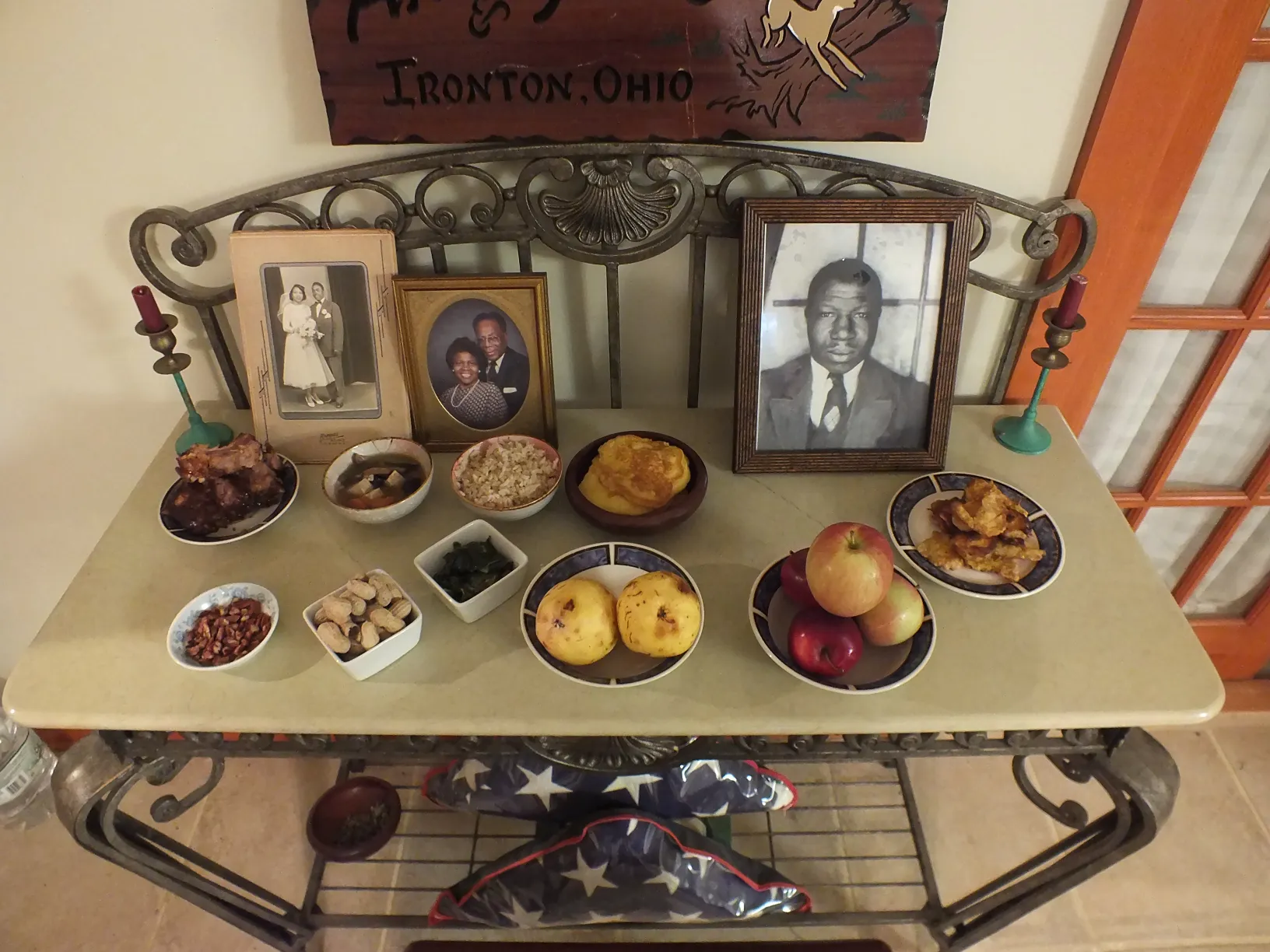
The altar is lined with photos of the deceased as well as a written family tree (tablet) bearing the names of our passed relatives. This roster is burned after the ceremony.
The ceremony itself consists of lighting incense, offering drinks of Korean Soju (rice wine), multiple bows, offering food, setting out the soup and rice, and then leaving the room for a time.
After we return, the offered soup and rice are removed from the altar, we bow again and then read the names on the family tree.
We take moment to address our ancestors and then finally the written tablet is burned. We then eat in the dining room.
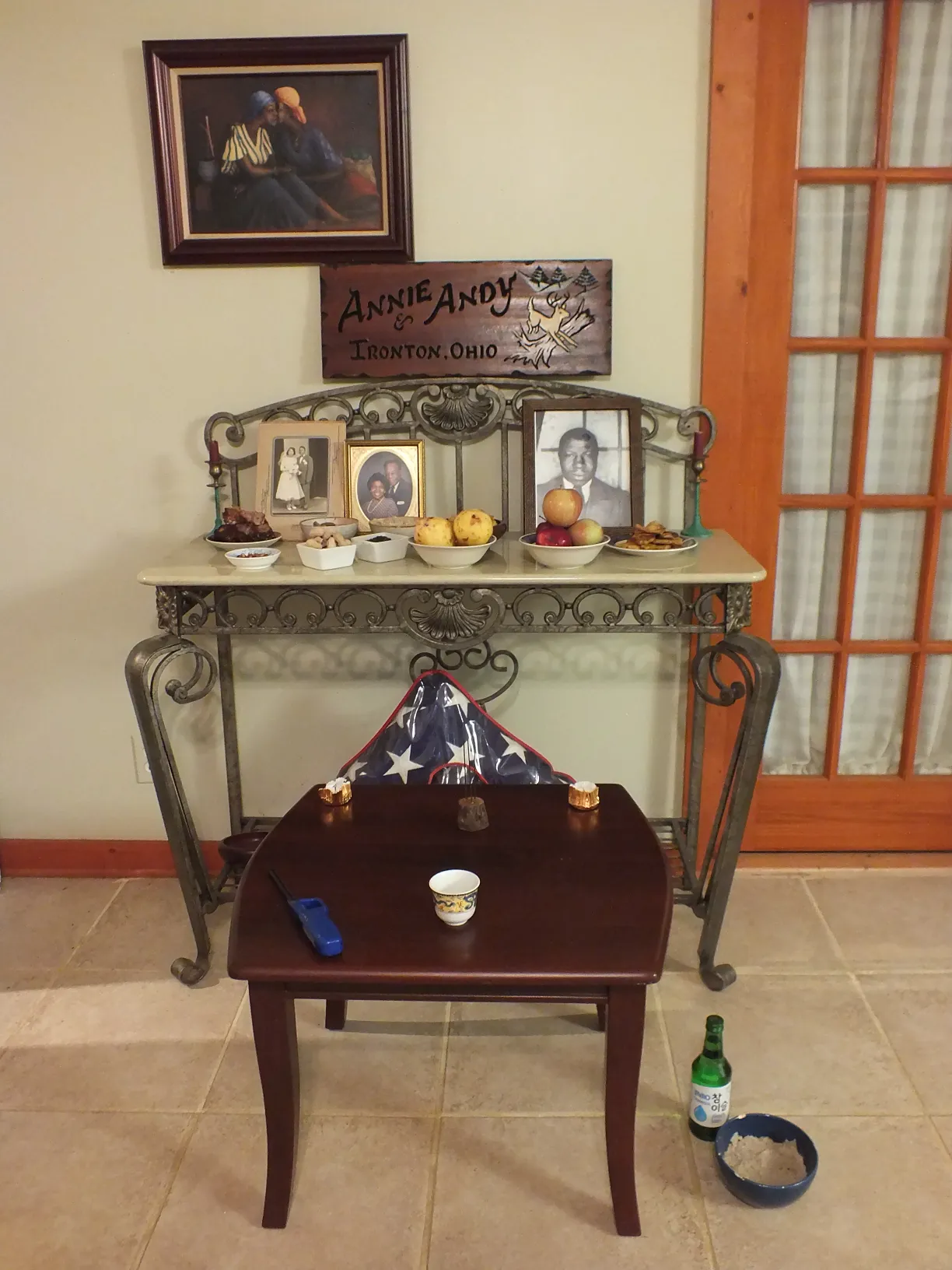
Occasionally, if we perform the ceremony early in the day, we go out to view Halloween displays at night, but this year we had the rites closer to the evening. It being so late we decided not to go out.
Our meal included the dishes from the ceremony and some other boiled veggies. For dessert we had Pecan Cake, Peaches and Cream Tillamook Ice Cream, and Peach Cobbler.

